
Tallinn University (EE)
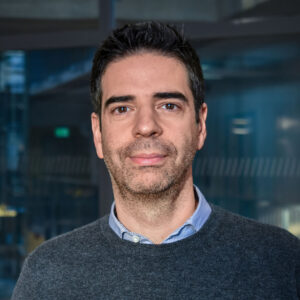
Nuno N. Correia is an Associate Professor in Digital Transformation at Tallinn University. Since 2000, he has been teaching and conducting research in media art and interaction design, in several universities internationally (such as Aalto University, Goldsmiths, University of Greenwich, University of Madeira). He holds a PhD in Art and Design in New Media, from Aalto University, with the thesis ‘Interactive Audiovisual Objects’ (2013). Nuno is also an associated researcher at the Interactive Technologies Institute (University of Lisbon). He has led several research projects combining sound, image, embodiment and interaction design, including a Marie Skłodowska-Curie postdoctoral fellowship and three Creative Europe projects. Previously, he worked at the design consultancy Fjord (now Accenture Song). Nuno has published over 50 peer-reviewed articles, in top Human-Computer Interaction conferences such as CHI, DIS and TEI; in audio venues such as NIME, SMC and Audio Mostly; and media art conferences such as ISEA, ICLI and ARTECH.
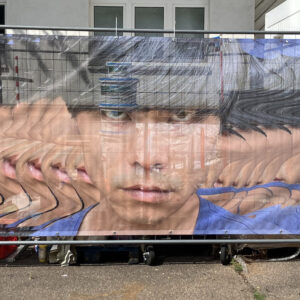
Naoto Hieda is a researcher and an artist from Japan based in Estonia enrolled in the PhD programme at the School of Digital Technologies Tallinn University. With a background in engineering (B.Eng. at Tokyo Institute of Technology, Japan and M.Eng. at McGill University, Canada), Naoto recently completed Diplom II (master’s equivalent) with distinction from the Academy of Media Arts in Cologne, Germany and works internationally for theater productions and in the visual arts. As a full-stack net artist, they question the productive qualities of coding and speculate on new forms, post-coding through neuroqueerness, decolonization and live coding. As a researcher, they fill the gap between dancers and technologists by proposing new tools and methodologies for collaboration.
Sõltumatu Tantsu Lava (EE)

Triinu Aron has been involved with STL since Nov. 2005 as a founder of the organization and today working in the company as a Managing Director. Her previous working experiences are from Art Museum of Estonia working there as a marketing director while the new museum building Kumu was opened. Before has been involved in business sector as her Bachelor degree is from international business management. The Master degree is in Culture Management in the University of Tartu / Open University and advocated my Master thesis in “Art Product and Its Value in an Estonian Culture Environment Context”. One of the founder and now a member of the Estonian Dance Roundatable. From 2014 the new independent dance stage in Tallinn – Sõltumatu Tantsu Lava- were opened and she was the leader of this process still now.

Pille-Triinu Maiste is a producer at Sõltumatu Tantsu Lava (STL), where she has worked since 2025 after previously being involved with the organization as a volunteer. She holds both a bachelor’s and a master’s degree in Art History and Visual Culture Studies from the Estonian Academy of Arts. Her academic work has focused on performing arts and contemporary dance. Sometimes she still writes opinion pieces on contemporary performance.
Hochschule Düsseldorf (DE)

Prof. Dr. Chris Geiger is professor of Mixed Reality and Visualization (MIREVI) at the Faculty of Media, University of Applied Sciences, Düsseldorf (Hochschule Düsseldorf) and leads MIREVI Team (www.mirevi.de), a group of 40 students and young researchers. Chris published over 120 papers in the areas of system design, artificial intelligence, computer graphics, mixed reality and human-computer interaction and served as reviewer and PC member in several conferences including CHI, IEEE VR, UIST and others. Since 2015 he directs the InnovationHub (www.innovationhub.de), an external think tank that is operated in close collaboration with two SMEs. His current work focuses on transfer projects and how applied state-of-the-art research can directly influence the work of external partners like industry, SMEs and cultural organizations.

Ivana Druzetic-Vogel is a cultural anthropologist and cultural project manager with 15 years of professional experience at an international level. Since 2018, she has been working as research associate in the MIREVI team at the University of Applied Sciences in Düsseldorf, Germany, where she conducts interdisciplinary research at the interface of art, culture and mixed reality technologies and manages several digital projects in this field. She is interested in exploring the effects and potentials of the digital turn in the cultural and artistic sphere, using her anthropological background to facilitate exchange and understanding between cultural actors and the technical field.
tanzhaus nrw (DE)
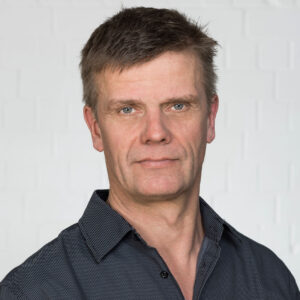
Stefan Schwarz has been a program director at tanzhaus nrw in Düsseldorf since 1998. He graduated in cultural education and arts management at the University of Hildesheim with a thesis on postmodern dance. In the early 1990s he danced at Ormand Performance in Cologne and organized festivals for theater and dance movies. In 2004 he co-curated the Tanzplattform Deutschland, and in 2005 he was the curator of the European artist laboratory Colina. He was a jury member a.o. at the choreographic competition Danse L’Afrique danse in 2008 in Tunis and at the Dutch dance film festival Cinedans in 2013. From 2012 to 2017 he was the project manager of the exchange programs Dance Dialogues Africa and Shifting Realities. Since 2006 he is responsible for the annual media dance festival Temps d’Images at tanzhaus nrw.
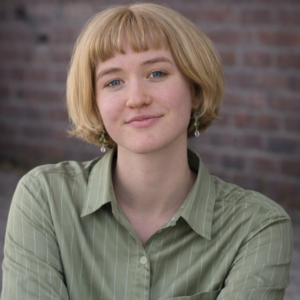
Randi Heringer has been working at tanzhaus nrw since 2021, where she completed her training as an event manager and, since 2024, coordinates dance and performance productions, residencies, and battles in the Artistic Operations Office. She is particularly interested in the processes behind artistic formats and in projects at the intersection of artistic and social practices. With a background in social and educational work and engagement with political and social questions through her studies in Sustainable Social Policy, she draws on this experience to shape her approach to collaborative cultural projects. Her engagement in dance and movement-based practices informs her interest in artistic processes and formats that bring together diverse perspectives and fields of practice.
Interactive Technologies Institute (PT)

Filipa Correia received a Ph.D. in Computer Science from the University of Lisbon, Portugal, 2021. She is a tenured Assistant Researcher at the Interactive Technologies Institute (ITI), external collaborator at INESC-ID, board member of ITI and an elected member of the scientific council of IST-ID. Her multidisciplinary research tackles the intersection of robotics, computer science and social psychology (i.e., human-robot interaction), and it is particularly focused on group dynamics between humans and robots in collaborative scenarios. Recently, Dr. Correia is also interested in exploring the robomorphism paradigm and disentangling a more-than-human perspective in the field of Robotics. In the past, she has been part of three EU Projects: EMOTE, iv4XR and DCitizens. Currently, Filipa is the PI of a nationally funded project, ERROR-MM, a joint collaboration with both CMU and Bielefeld University.
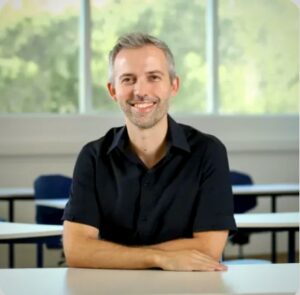
David dos Santos holds a PhD in Philosophy of Science, Technology, Art and Society [University of Lisbon], an MA in Multimedia Culture and Art [FEUP|U.T. Austin] and a BA in Theatre Studies [ESMAE]. In scientific research, he was an FCT doctoral grantee and a collaborator/researcher of the international projects MODINA, Blackbox: Arts & Cognition and TKB: Transmedia Knowledge-Base for Performing Arts; Organizer of Nova University of Lisbon’s TKB and PAI international conferences.
O Espaço do Tempo (PT)
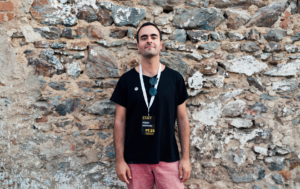
Pedro Barreiro is an artist who has developed several works as a director, performer, scenic maker, dramaturg, producer, programmer, and curator. He has been interested, in recent years and among other things, in thinking about performative acts as poetic generators, in experimenting with the conventions of theatrical forms, and in strategies for dismantling hegemonic systems in contemporary art. Since 2020, he has been continuously creating and presenting the performance titled an artist is always working (www.alwaysworking.art). He was the artistic director of Teatro Sá da Bandeira, in Santarém (2015-2017), and collaborated with Teatro Praga as programmer of Rua das Gaivotas 6 (2019-2022). He is an associated artist of Cão Solteiro, since 2020. He is also a founding member of the collectives Sr. João (2010), and Activo Tóxico (2017). Currently, he is the artistic director of O Espaço do Tempo.

Patrícia Carvalho. Lisbon, 1992. She’s lived most of her life in-between the suburbs of Lisbon and Santarém and it was during her degree in Cultural Sciences that she discovered the passion for Arts. Between 2013 and 2019, she worked as an exhibition assistant and mediator at the Museu Benfica Cosme Damião, MAAT – Museu de Arte, Arquitectura e Tecnologia and Lisbon&Sintra Film Festival. Between 2015 and 2019, she collaborated with Culturgest as a mediator and production assistant and in 2018, she was the casting coordinator and producer on the show 100% Lisboa, directed by the company Rimini Protokoll. In 2019, she collaborated with The Book Company, where she worked in the editorial context and the production of literary events. In that same year, she moved to Alentejo and took on the Executive Production of O Espaço do Tempo and, in 2023, the position of Executive Director.

Sónia Cabecinhas has a degree in Literature & Arts from the University of Évora (2016). She completed her master’s degree in Journalism at FCSH/NOVA in 2019. From that year until 2021, she worked for the Portuguese company Grupo Bertrand Círculo as a content creator for the magazine and blog of Livraria Bertrand, while also managing social media. She has done some freelance work in social media management. She has completed several training programs: Digital Marketing (2021), Inclusive and Neutral Language (2023), Digital Content Management (2024), and Cultural Communication (2025). Currently, she works as the communication coordinator for O Espaço do Tempo and is also responsible for all administrative work associated with the grants issued by the structure.
UNATC (RO)
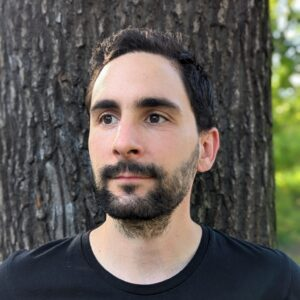
Grigore Burloiu is a Lecturer in the Animation & Interactivity department at the National University of Theatre and Film in Bucharest, where he teaches Creative Coding, Interactive Music Systems and Game Development, and coordinates the Interactive Technologies for Performing and Media Arts M.A. Grigore develops systems for expressive accompaniment and for interactivity in art. In 2024 he participated in the MODINA project alongside Simona Deaconescu with a lecture-performance where he developed AI systems for music and text interaction. He has also done practice-led research into motion and gesture sonification for interactive performance. His artistic collaborations have been presented internationally in venues such as Ars Electronica (AT), Vivid Festival (AU), Fete des Lumieres (FR), Prague Quadrennial of Performance Design and Space (CZ).
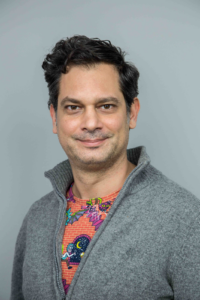
Alexandru I. Berceanu is a mixing-realities director and researcher conducting interdisciplinary research at the intersection of art and neuroscience. Starting with his doctoral studies, his research has centered on aggressive and prosocial behavior, using drama and immersive environments as investigative tools to develop emotional regulation through gamified approaches and theatrical representation. His results are published in international journals, and his artistic work covers interactive-media installations, VR, immersive environments, and theatre. He is an associate professor in the Animation and Interaction Department at UNATC Romania, where he also teaches in the Community and Therapeutic Theatre master’s program. At UNATC he initiated the International Center for Research and Education in Innovative and Creative Technologies (CINETic), as well as its master’s program in Interactive Technologies. Links: http://alexandruberceanu.org/, https://orcid.org/0000-0001-9115-9399
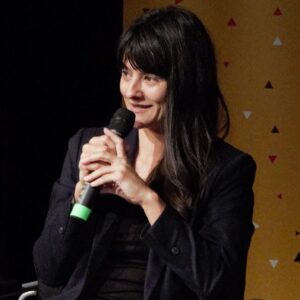
Elena Belciu is a cultural manager with an academic background in philology, British cultural studies, and theatre. She currently serves as Programs Coordinator at CINETic International Center for Research and Education in Innovative and Creative Technologies, within the National University of Theatre and Film “I.L. Caragiale” (UNATC) in Bucharest. In this role, she manages teams and organizes a range of events, including conferences, workshops, and research initiatives. Among the most recent projects she was involved in are the AI in Art Practices and Research Conferences (2024, 2025), which explore the impact of artificial intelligence on artistic creation and research, as well as its broader societal applications. She is a founding member of OISTAT Romania (International Organisation of Scenographers, Theatre Architects and Technicians), where she served on the organizing team for the International Program in Scenography (2023-2025) and the Bucharest Scenography Biennale (2024). From 2006 to 2017, she worked as assistant manager for multiple global youth-focused festivals and conferences through the UNESCO Chair of the International Theatre Institute. Elena Belciu holds a PhD in Theatre Studies (2017) and is an alumna of the U.S. State Department’s International Visitor Leadership Program (2017).

Valentina De Piante is an Assistant Professor at the I.L. Caragiale National University of Theatre and Film in Bucharest, Doctor of Performing Arts, choreographer, performer, project coordinator, and a Feldenkrais Method®️ practitioner. In 2020, she co-founded the Areal – Space for choreographic development and has collaborated closely with Indie Box, engaging in durational performances, community workshops, and research residencies. Her performances have been showcased at notable venues like Explore Dance Festival, the National Center of Dance in Bucharest, Trois C-L in Luxembourg, and the ImPulsTanz Festival. A major part of her choreographic work involves exploring consciousness through circumferential perspectives, often bridging art with scientific research. She was also involved in DanceBrainRehab, an Erasmus+ project, applying neuroscience to dance for vulnerable communities. In 2020, she received the CNDB prize for independent artists and published Body of Knowledge in 2021. Nowadays she is supporting a larger community on the topic of inclusion through the national project C.R.E.S.C.-network of creation, education, health, research. https://arealcolectiv.ro/
Centrul Național al Dansului București (RO)
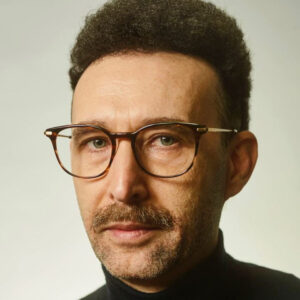
Mihai Mihalcea is a graduate of the Choreography High School and of the National University of Theatre and Film Arts “I.L.Caragiale”, Choreography Department, Bucharest. In the 1990s he was a dancer at the Komische Oper Berlin and a collaborator of the Christian Trouillas Company in Paris. As an artist he contributed to the international recognition of Romanian contemporary dance and, at the same time, he played an essential role in the steps that led to the establishment or activity of structures and institutions that have become landmarks of this art: Marginalii Group (the first independent contemporary dance group founded after ’89), Inter/National Centre for Contemporary Dance, Multi Art Dance Centre, and co-founder of the first public institution dedicated to contemporary dance – National Centre of Dance Bucharest (CNDB) whose director he was from 2006-2013. For the projects developed within the CNDB he was nominated for the “Paris – Europe 2006” award by the Maison d’Europe et d’Orient in Paris.
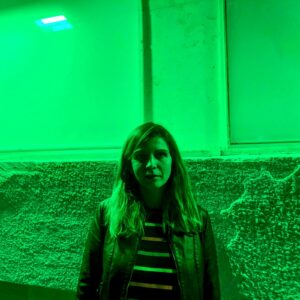
Ana Papadima has been involved in artistic education and training projects for CNDB since 2016. She has a BA in Sociology and an MA in Anthropology. She is currently coordinating dance project ‘SEEDS’ – with a focus on dance training, international co-production and circulation of dance works. She has organized the 2 editions of the `Academy of Dance and Performance`(2019-20 and 2022-23), a training program for emerging dancers, performers and dance producers, as well as the `Performing Arts School for Children` and other dance education programs for artists and non-professionals.
Antistatic (BG)

Willy Prager is an artist and producer working in the field of contemporary dance and performance. He graduated from the experimental theater classes 4xC, a bachelor’s degree in “Synthetic and Performing Arts” at Plovdiv University in 1999, and a master’s degree in choreography “Solo, Dance, Authorship” at the University of the Arts in Berlin in 2013. Willy Prager is the author of more than 15 performances. He is the recipient of the European Choreography Award “Jardin d’Europe” from “ImpulsTanz”, Vienna, for the performance “The victory day” (2013). Together with Iva Sveshtarova they received the national awards “Ikar” for the performance “shamebox” (2018) and “Produced for Happiness” (2019), as well as the “IMPULS” award for company of the year 2025. Prager is a co-founder of the “Brain Store Project” foundation (2005), Nomadic Dance Academy, the Contemporary Dance and Performance Festival “Antistatic” (2008), and “Magazine for dance” (2018).
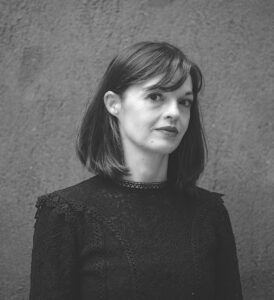
Iva Sveshtarova is a choreographer, performer, cultural manager, and curator working in the field of contemporary dance and performance. She has created more than 15 performances and has received several awards for her collaborative works with Willy Prager. Alongside her artistic practice, she has over 20 years of experience in initiating, organizing, and curating international artistic projects, educational programmes, and festivals. She is a co-founder and co-curator of the Antistatic International Festival for Contemporary Dance and Performance in Sofia. Through her work, Sveshtarova has led and developed numerous artistic and educational initiatives that contribute to the growth of sustainable and critically engaged dance scene in Bulgaria.
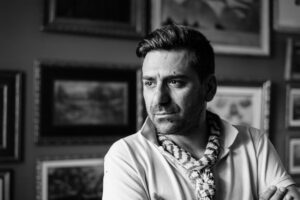
Stephan Shtereff is a Bulgarian artist, curator, producer, Tv host and cultural manager with extensive professional experience in the field of contemporary performing arts. His work combines artistic practice with project development, curation, event organization, and international cultural collaboration. Over the past 12 years, he has initiated, developed, and managed numerous cultural projects, performances, festivals, and interdisciplinary events. His professional profile brings together artistic vision and organizational expertise, with a strong focus on contemporary theatre, dance, performative formats, and the presentation of experimental artistic work. His artistic career is closely connected to the development and support of contemporary performing arts in Bulgaria and worldwide, with a particular interest in platform-building, audience engagement, curatorial selection, and the creation of contexts for new artistic work. Stephan won numerous awards for his work as a performer and author.